When you have a small window air conditioner, you expect that it will only be able to cool a limited radius, at most a single room, and it still may not make the space evenly cool. When you have a central air conditioner for your house, you do expect that it will keep up with the heat and provide enough cooling for your whole house to stay comfortable. Yes, there will be some temperature fluctuations based on the house, but overall the house should feel close to the setting on the thermostat.
If you are currently not getting that from your AC, it’s possible you need to call us for air conditioning repair in Colorado Springs, CO. Below we’ll take a look at why you may be experiencing this problem.
What Causes an Air Conditioner to Run Without Cooling Properly?
If your air conditioner is running but not cooling enough, the problem is often related to maintenance issues such as:
- Dirty air filters: Restricted airflow reduces cooling performance.
- Blocked condenser coils: Outdoor debris prevents proper heat release.
- Low refrigerant levels: The system cannot absorb and transfer heat effectively.
- Thermostat problems: Incorrect readings can cause short cycling or weak cooling.
Lack of routine maintenance: Skipped tune-ups allow small issues to reduce efficiency over time.
Continue Reading
Tags: Air Conditioning Repair, Air Conditioning Replacement, Colorado Springs
Posted in Air Conditioning | Comments Off on Is Your AC Cooling, But Not Cooling Enough? Let’s Find Out Why

 If your air conditioner is getting old, breaks down frequently, or you have a case of rising energy bills in the summer, it may be time to get a new air conditioner.
 Many homeowners buy an HVAC system for central air conditioning in Colorado Springs. Although we have intense winter weather, we can also experience summers that get quite hot. If you’ve lived in the area for even one summer, you know it can be difficult to stay indoors without good air conditioning to cool off you and your family.
 We offer our customers plenty of advice for how they can get the most out of their
  An air conditioner can often seem like a magical device. We understand how we get heat from furnaces and fireplaces—combustion gives off warmth. But an AC is a box or set of boxes that somehow creates cool air, the opposite of fire. Because an air conditioner can feel like a remarkable device, people might treat them as if they don’t have limits. They can cool a house down as much as necessary.
 High efficiency
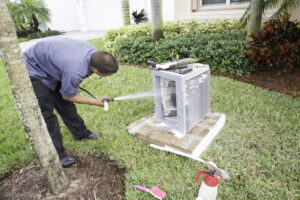 If you’ve lived in Colorado Springs through at least one winter season, you know that the arrival of March is no guarantee that the weather will just keep getting warmer as we move into spring. Nonetheless, it
  This week is the official start of fall. Temperatures, of course, don’t strictly obey the calendar, and you may still need to rely on running your air conditioner for a few more weeks. But it’s a transition time, and this is an ideal point in the year to stop and consider how well your air conditioner performed over the summer. This can help you make a few important decisions about your HVAC system and home comfort—in particular, answer the big question: “Is my AC good for another year, or should I schedule a replacement?”
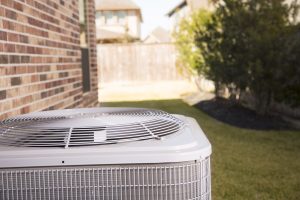 A piece of machinery that’s covered with a layer of grime and dirt won’t run as well as when it’s clean. That’s just a basic fact. When it comes to your air conditioning system, a layer of dirt and grime almost anywhere on it is bad news. For example, dust along the indoor evaporator coils can quickly cause the AC to lose energy efficiency and ice to develop along the coils.
 The indoor fan for your central air conditioning system is not only how the AC sends cooled air around the house. It’s also how the AC moves warm air brought from the living spaces across the evaporator coils to cool it down. Without a working fan, you have no cool air and no way to deliver any air to the rooms.


